

The real expense sits behind the machine.
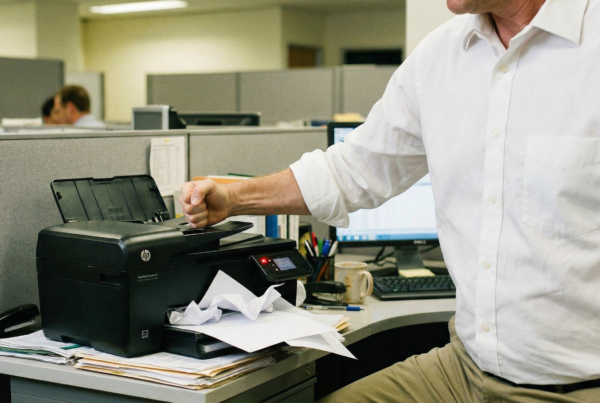
There’s a certain point where a process stops feeling “reliable” and starts feeling like hard work.The printer jams again. Someone’s hunting for envelopes. Ink runs out halfway through a batch. A team member stays late to finish post before collection. Nobody questions it because “that’s just how sending mail works”. But for a lot of UK businesses, the real problem is not the post itself.
It’s the franking machine sitting in the middle of it all.
Franking machines are often sold as the cheaper alternative to stamps. Technically, they are. But once you look beyond the postage price alone, the maths gets a bit less convincing. The hidden costs usually sit somewhere else: long contracts, consumables, maintenance, manual admin, staff time, compliance risk and operational delays.
Before you compare machines, compare the process
Franking machines are usually sold on postage savings. But for most businesses, the bigger cost sits around the machine: printing, supplies, admin, staff time and manual handling. Before you renew a contract or compare another franking machine quote, check what your current process is really costing.
*Try the cost savings calculator
Here are five hidden franking machine costs businesses often overlook, and why more teams are moving towards hybrid mail instead:
1. Franking machine contracts can outlast the way your business works
Most franking machine agreements were built for a different way of working. Back when everyone was office-based, post volumes were predictable and businesses had dedicated post rooms, they made sense. Now teams are hybrid, offices are smaller and post volumes fluctuate. But the contract often stays fixed. Monthly rental, servicing, software updates, minimum terms and exit fees can keep going long after the setup stops fitting how your business works.

2. The machine is only part of the cost
The biggest misconception around franking machines is that you’re only paying for postage.
You’re not. You’re also paying for
| Cost area | What it usually includes |
|---|---|
| Consumables | Ink, labels, envelopes, paper |
| Equipment | Printer maintenance, toner, replacement parts |
| Support | Engineer visits, servicing, software updates |
| Admin | Ordering supplies, managing stock, fixing issues |
3. Mailmark savings are smaller than most businesses expect
Yes, Mailmark franking can still be cheaper than stamps. But for standard letters in 2026, the saving can be just a few pence per item.
For example, published 2026 rate tables show a 1st Class letter at £1.80 by stamp and £1.77 by Mailmark franking, while a 2nd Class letter is 91p by stamp and 88p by Mailmark franking.
That matters because the machine still brings rental, consumables, maintenance, updates and staff handling time with it.
| 2026 letter type | Stamp | Mailmark franking | Difference |
|---|---|---|---|
| 1st Class letter up to 100g | £1.80 | £1.77 | 3p |
| 2nd Class letter up to 100g | £0.91 | £0.88 | 3p |
4. Staff time disappears into the post process
This is the cost most businesses underestimate.
Franking machines still depend on people. Letters need printing, folding, inserting, franking, sorting and preparing for collection. Failed batches need reprinting. Spend needs reconciling. Mistakes need fixing.
None of that feels huge on its own. Together, it eats hours.In a hybrid team, the process becomes even more fragile. If the right person is not in the office, the post waits. If the printer breaks, the post waits. If envelopes run out, the post waits.
5. Manual post creates compliance and data risks
The more manual a mail process is, the more opportunities there are for mistakes-whether that’s the wrong envelope, a missing page, a duplicate insert, or sensitive information being sent to the wrong recipient.
For businesses handling:
- legal correspondence
- financial documents
- healthcare communications
- tenant notices
- customer account information
Those are the risks that matter.
The cost is not just the reprint. It’s the complaint, the operational disruption, the investigation, and the reputational damage that follows. Many businesses focus purely on postage savings while overlooking the much bigger question:
Can you confidently track and control your outbound communications process?
If the answer still depends on people manually checking trays of envelopes, there’s probably room for improvement.
Is hybrid mail a better franking machine alternative?
For many UK businesses, the answer is yes.
Hybrid mail removes the physical machine from the middle of the process. Instead of printing, folding, franking and preparing post in-house, your team uploads documents digitally through a platform like Postworks. From there, the letters are printed, packed and handed over for delivery, without your team dealing with printers, envelopes, ink, labels or machine maintenance.
That means less manual admin, fewer delays and no need for a physical post room. Most importantly, it fits the way modern teams actually work. Whether your team is in the office, hybrid or remote, they can send post securely from anywhere.